
Quick answer: A mobile pet grooming service brings a fully equipped grooming van to your driveway. Inside: a grooming table, stainless tub, high-velocity dryer, 30 to 60 gallons of fresh water, and on newer battery-powered units, climate control without a generator. One dog at a time, start to finish.
A mobile-grooming van pulls 18 to 24 amps when the dryer and the heater are both running at the same time. Which is exactly why the power setup matters. Most people think mobile grooming just means a van with a hose. The actual setup is more considered than that, and it’s worth knowing what’s in there if you’re booking for the first time or thinking about what makes one van different from another.
Here’s what’s actually inside a professional mobile pet grooming service, and why each piece of it affects the appointment your dog is getting.
Battery Power vs. Generator: Why It Matters More Than You’d Think
Older mobile grooming vans ran on gas generators. Loud. Exhaust risk inside the van space. Temperature swings when the load changes. Newer purpose-built units (including battery-powered configurations like Kontota’s) run on lithium battery banks paired with a shore-charge connection. The result is quieter, cleaner air inside the van, and more predictable climate control. A generator spikes when you turn on the dryer. A battery system with a well-sized inverter doesn’t. For anxious dogs, that difference in ambient noise matters. For summer days in Texas or Phoenix, the difference in temperature consistency matters a lot.
Climate Control on a Route: Summer Heat and Winter Cold
A grooming van in a Florida July or an Ohio January needs real climate control, not a window cracked open. The van interior has to stay at a safe temperature for the dog while the equipment runs and the groomer works. A purpose-built unit has a dedicated HVAC unit sized for the cargo area (not the cab’s air conditioning, which doesn’t reach the work area). On battery-powered systems, the HVAC draws from the same power bank as the equipment, so sizing matters. Under-specced vans either get too hot or drain the battery mid-route. Right-specced vans hold temperature across an 8-groom day without issues.
The Water System: 30 Gallons Goes Faster Than You’d Think
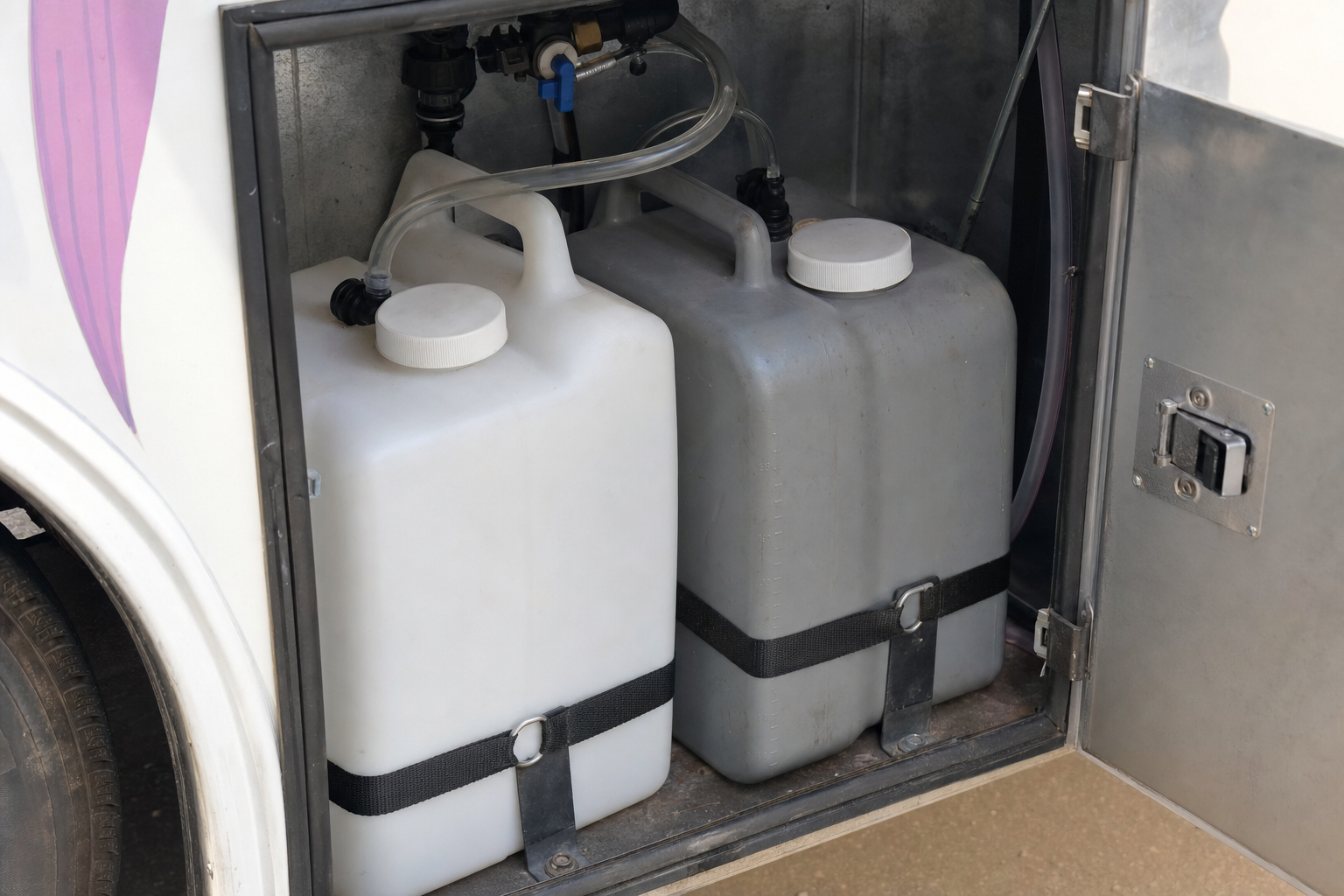
A professional mobile grooming van carries 30 to 60 gallons of fresh water and a matching gray water tank. A four-dog route burns roughly 35 gallons total, depending on breed and coat. The math runs out faster than people expect. A single large breed like a Bernese Mountain Dog or a golden can use 8 to 10 gallons on its own. Groomers on busy routes top up at client homes with an outdoor hose connection (standard on most vans) or end the day earlier than they’d like if they didn’t plan the route water consumption correctly.
The Equipment Sequence: What a Groomer Actually Uses
The appointment sequence in a mobile van is different from a salon because the groomer is the only person in the van with the dog, start to finish. No hand-off to a bather, no cage drying while another dog is on the table. In order:
- Pre-bath brush-out to remove loose coat before the water hits
- Pre-rinse until the coat is fully saturated
- Shampoo, coat-appropriate formula, worked through from skin out
- Conditioner on long or double coats
- Thorough rinse (this takes longer than most people budget for)
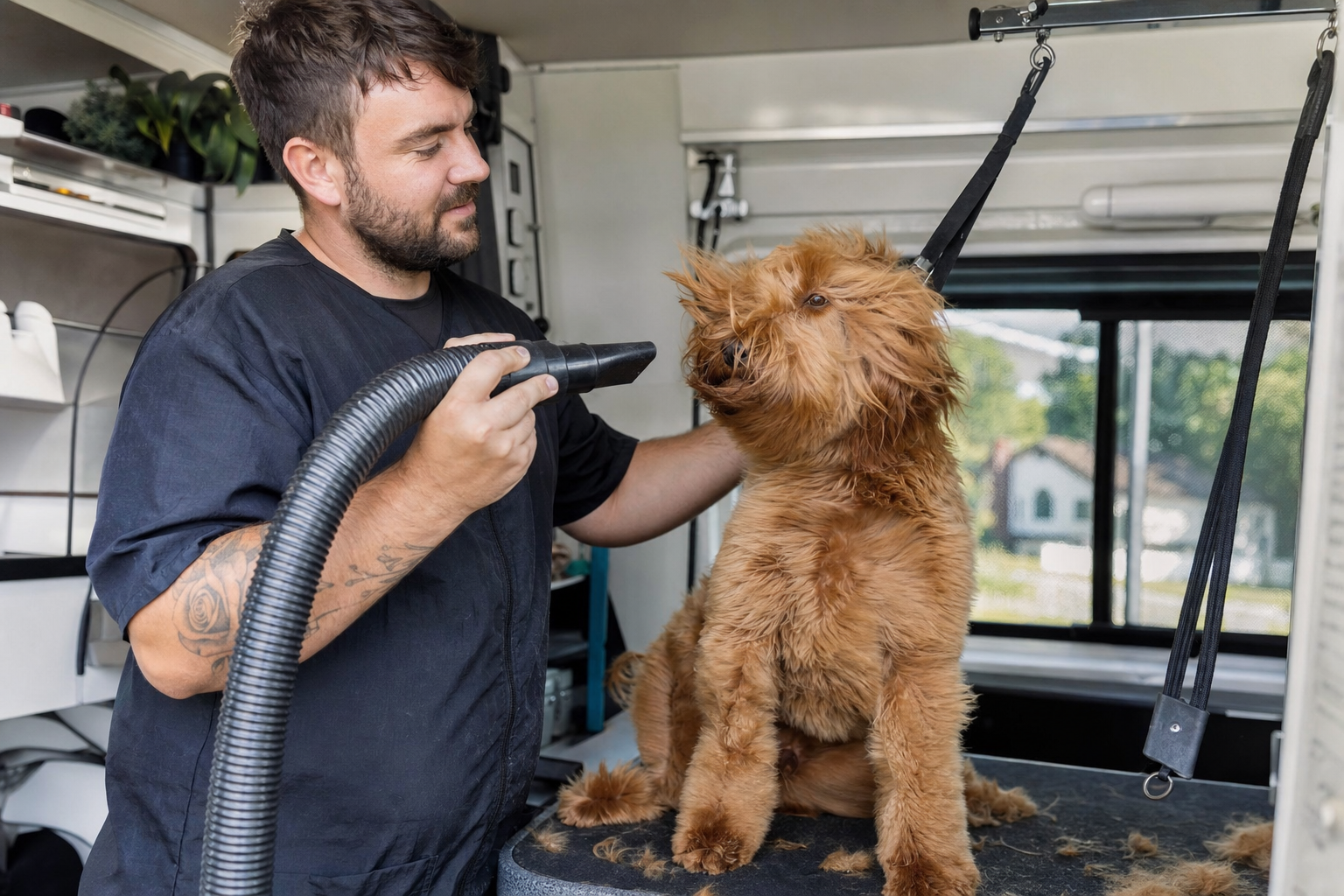
- High-velocity blow-dry (commercial unit, 30-50 mph airflow)
- Table work: trim, nail grind or clip, ear clean, finishing brush
- Final check and hand-off at the client’s door
The whole sequence for a medium dog runs 60 to 90 minutes. A large or mat-prone dog can run over 90. That’s one reason mobile grooming prices reflect time more than salon prices do, you’re not sharing a groomer’s attention with three other dogs.
The Route Tech: Booking, Dispatch, and Navigation
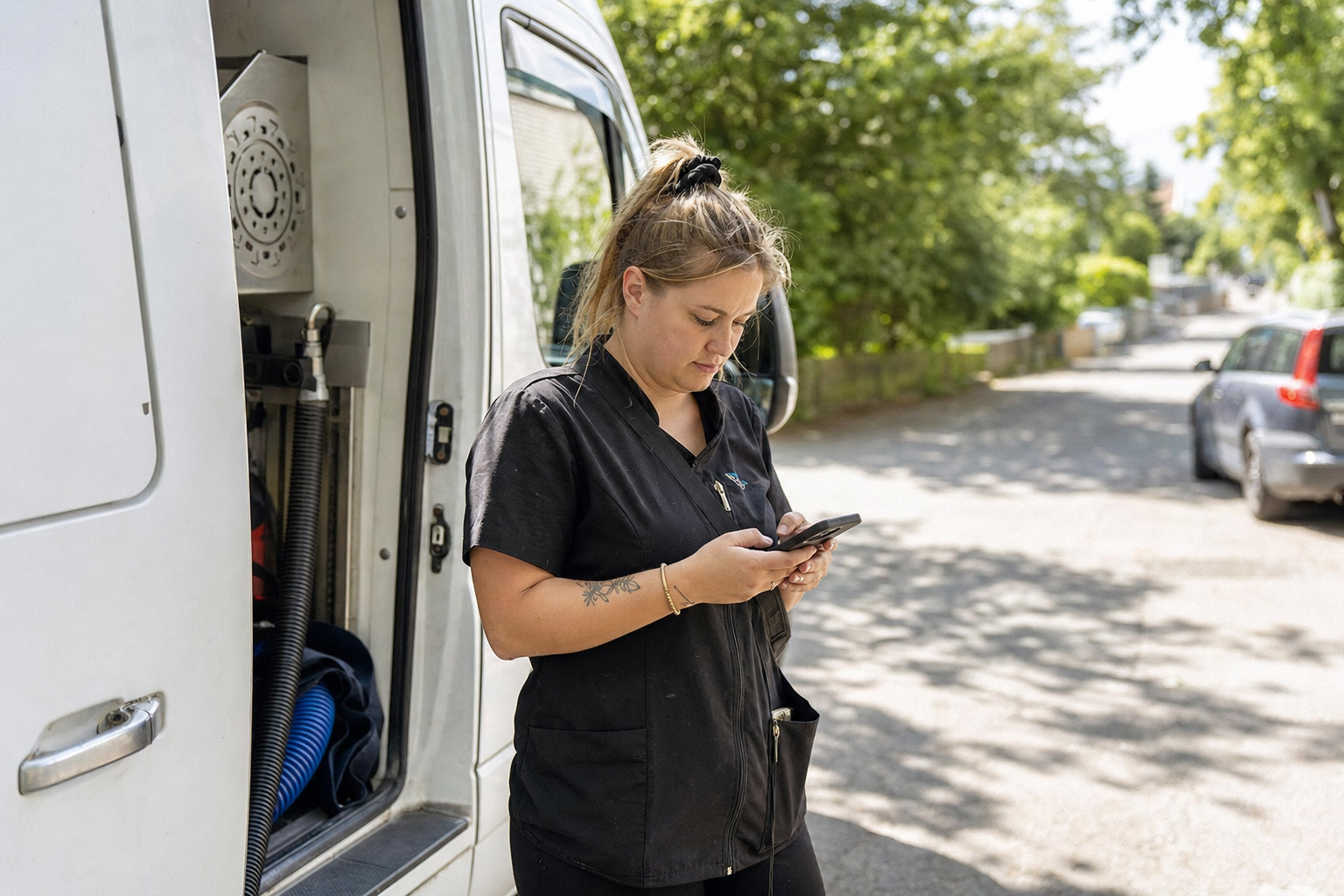
The back-end of a mobile pet grooming service is increasingly software-driven. Route optimization matters because drive time is the cost that eats margin fastest. A groomer who averages 14 minutes between stops has a very different day than one averaging 30. Route-planning tools (some brands integrate them into their franchise platform, some groomers use third-party routing apps) sequence stops by geography rather than by booking order. Payments are digital, tips go through the app, customer notes carry across appointments. The groomer arrives knowing Pepper had an ear infection last time and Bear is nervous about the dryer on his face.
One Dog at a Time: What That Actually Changes
This is the part owners mention most in reviews. In a salon, a dog may wait in a kennel for 30 minutes before a groomer is available, then wait again during cage drying. In a mobile van, the dog goes from your driveway into the van and the groomer starts immediately. One dog at a time, no other animals in the space. For dogs that are reactive, anxious around other dogs, or elderly with mobility issues, that’s not a minor comfort point. It changes the whole experience.
To understand what goes into each Kontota unit, battery specs, equipment list, the tech stack behind the franchise, you can review the full overview when you’re ready. We can walk you through the franchise model including exactly what franchisees receive. The franchisee training and support covers both the technical side and the route operations, so new owners understand the van before their first appointment.
The van is the product. Everything else, scheduling, routing, customer communication, pricing, is the system that makes the van profitable. Both need to work. A well-built van with bad route planning doesn’t make money any faster than a good route plan with a van that breaks down every Thursday. The technology and the box together are what you’re actually evaluating when you look at a mobile grooming franchise.

