
Quick answer: Most first-time buyers finance a mobile pet grooming franchise with SBA 7(a) loans, ROBS (401k rollovers), or a combination of both. Franchisor lenders exist and can help. Home equity lines fill gaps. Rarely does one source cover everything cleanly.
Dana called me in March. She had $47,000 in savings, a solid 401(k), and a real estate agent who told her she had ‘plenty’ to start a mobile pet grooming franchise. Six months later she was staring at an SBA underwriting checklist asking for three years of self-employment tax returns filed as a gig contractor. Nobody told her that part. Her real estate agent definitely didn’t.
Franchise financing for a mobile grooming operation isn’t a black box. But it has real requirements, real timelines, and a few traps that catch buyers who show up without a plan. Here are the four paths that actually work, with the real numbers.

Why Most Buyers Get the Math Wrong From the Start
People fixate on the franchise fee. It’s on the FDD cover page and it’s a round number. Feels like the main cost. It isn’t. For a single-van mobile grooming operation, total project cost (the number lenders actually care about) runs $85,000 to $130,000 depending on the van configuration, territory, and working capital buffer you carry. The franchise fee is usually $35,000 to $55,000 of that. The rest is van build-out, first-month operating costs, insurance deposits, and the loan origination fee itself. Banks lend 70 to 80 percent of the total project cost. You need to bring 20 to 30 percent as a cash injection. That’s $17,000 to $39,000 in cash, sitting in your account before the ink dries. Get that number locked in before you talk to any lender.
SBA 7(a) Loans: The Most Common Route
The SBA 7(a) is the loan most mobile franchise buyers end up using. For a single-van start, you’re usually borrowing $65,000 to $105,000. Rates run prime plus 2.75 to 3.5 percent. Repayment goes up to 10 years on equipment-heavy loans. Here’s what you need to qualify:
- Two to three years of personal tax returns (this trips up gig workers and contractors)
- Credit score of 680 or above (some lenders go to 650 with a strong down payment)
- Business plan with a 12-month cash flow projection
- Copy of the franchise agreement or FDD
- Personal financial statement
- 20 to 30 percent cash injection from your own funds
One thing that matters: the SBA Franchise Registry. If the franchisor is listed, underwriting moves faster because the SBA has already reviewed the FDD. Timeline drops from 60 days to roughly 30. Worth confirming before you start the application.

ROBS: Your 401(k) as Startup Equity
If you have $80,000 or more sitting in a 401(k), ROBS (Rollover for Business Startups) is worth a hard look. The structure works like this: you roll your retirement funds into a new C-corporation, which then buys shares in your franchise business. No early withdrawal penalty. No loan payment. No interest. (That part surprises people.) The risks are real though. You need a ROBS administrator, which runs $5,000 to $5,500 upfront plus $130 to $150 a month in ongoing fees. The IRS pays close attention to these structures, so paperwork sloppiness is expensive. And if the business fails, the value of your retirement account goes with it. It’s equity, not a loan you can walk away from.
Home Equity Lines and Personal Loans
A lot of first-timers skip the HELOC conversation because putting your house behind a business bet feels uncomfortable. Fair. But if you have equity, rates are usually lower than SBA rates. A home equity line works well as the 20 percent cash injection for your SBA loan, covering the down payment without touching your savings or retirement account. Personal loans are faster (sometimes approved in a week) but cap out around $40,000 to $50,000 and carry higher rates. They work as gap-fill money, not as your primary financing. If you’re $8,000 short on a down payment, a personal loan solves that cleanly.
Franchisor-Affiliated Lenders: Read the Fine Print
Some franchisors have relationships with lenders who specialize in their system. These can genuinely help. The lender has funded this brand before, knows the van as collateral, and moves faster because they’re not learning the FDD from scratch. But terms vary. Some franchisor lenders have reporting agreements with the brand. Some structure notes in ways that favor the franchisor’s exit more than yours. Get a second quote from an independent SBA lender before you sign anything. A comparison takes a week and could save meaningful money over a 10-year note.
| Financing path | Typical amount | Rough rate | Timeline | Key risk |
|---|---|---|---|---|
| SBA 7(a) | $65K to $105K | Prime + 2.75-3.5% | 30 to 60 days | Tax history; 20-30% down required |
| ROBS (401k) | Up to your balance | None | 3 to 6 weeks | Retirement funds at risk if business fails |
| Home equity line | Depends on equity | Variable, often lower than SBA | 2 to 4 weeks | Your home is collateral |
| Franchisor lender | Varies by brand | Varies | 2 to 4 weeks | Terms may favor franchisor exit |
How Most Buyers Actually Do It
Here’s what works most often in practice. ROBS covers the 20 percent cash injection, SBA covers the van and working capital. Or a home equity line covers the down payment, SBA covers the rest. Rarely does one source fund everything cleanly. The math that decides it for you: monthly debt payment versus projected revenue at 90 days. A single van running 8 grooms a day at a $95 ticket average produces roughly $17,000 a month at 22 working days. If your monthly debt payment is $1,100, that math works with room. If you’re carrying $1,800 a month in debt service and your ramp is slow, month four gets tight. Run the 90-day scenario before you pick a financing path.
One more thing. The franchisee training and support you get from the brand covers operations and grooming. It doesn’t cover financing strategy. A franchise attorney and a CPA who has worked franchise deals are worth hiring before you sign. Combined, they run $3,000 to $6,000. That fee comes back fast when they catch a clause you’d have missed.
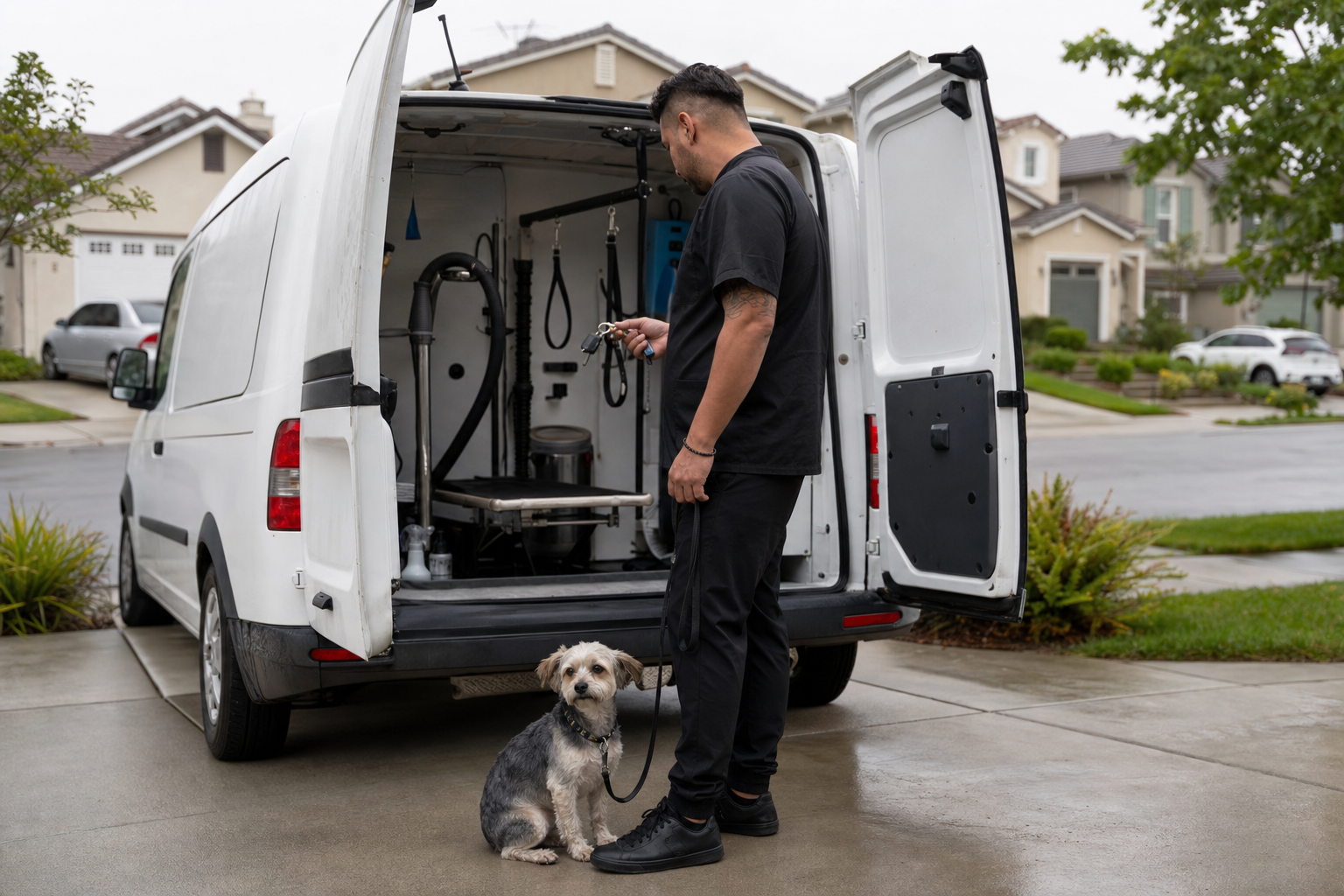
If you want to understand the full cost structure before you sit down with a lender, book a discovery call to walk through the franchise model, van specs, and territory pricing. Better to know the real number early than to find out at underwriting.
Franchise financing isn’t exciting. It’s tax returns, bank statements, and waiting rooms. But mobile grooming franchises have a documented cost structure, a known van asset as collateral, and a proven market. That’s a better starting position than most small business loan applicants have. Use it.

