
For an entrepreneur evaluating a service business, a mobile dog grooming franchise offers more than a van that travels to a customer’s driveway. It combines a recurring customer need with a home-based operating model, a defined territory, trained service professionals, and a franchise system built to support local execution. That combination can be attractive to career-transition professionals, first-time business owners, existing operators, and investors seeking a scalable service concept.
Book a discovery call with Kontota
A mobile dog grooming franchise is a branded service business in which the franchise owner develops and manages a local territory. Trained groomers deliver professional care from an equipped van at the pet owner’s home. The model can suit entrepreneurs who want to lead a recurring-revenue service business without performing the grooming themselves. Investors still need to review the total investment, staffing plan, territory terms, training, support, and financial disclosures before deciding.
This guide explains how the model works, what ownership requires, what a launch can involve, and how to evaluate the opportunity responsibly. It is written for franchise buyers, not pet owners looking to book a grooming appointment. The goal is to give a prospective owner a practical diligence framework before a discovery conversation and Franchise Disclosure Document review.
What Is a Mobile Dog Grooming Franchise?
A mobile dog grooming franchise brings professional grooming directly to customers instead of operating from a conventional retail salon. The service business uses a purpose-built grooming van, a defined territory, scheduling and routing systems, brand standards, and a repeatable operating process. The franchise owner is responsible for developing the local business, managing people and performance, and protecting the customer experience.
In a mobile dog grooming franchise, the van is the service location and the territory is the operating market. The owner manages the business while trained groomers provide care at customers’ homes. A franchise system adds brand standards, training, technology, and ongoing support to the local operating plan.
That distinction matters when comparing a franchise with an independent startup. An independent owner must create the brand, service standards, pricing approach, marketing plan, hiring process, technology stack, and operating procedures from the ground up. A franchise does not remove local responsibility, but it gives the owner a framework for making those decisions and a system to follow.
Kontota positions its model as technology-driven and home-based. An owner can manage the business from a home base while groomers deliver services in the field. This structure is designed for someone who wants to lead staffing, customer relationships, scheduling, local marketing, and business performance without needing to perform every grooming appointment. Learn how Kontota describes its mobile grooming model before comparing it with other franchise concepts.
How the mobile service model works
The van travels within a protected territory and serves customers where they live. This removes the need for a retail storefront and reduces the transportation friction associated with a salon visit. For pet owners, the convenience can be meaningful. For an investor, the important question is how that convenience translates into a well-run local operation with realistic routes, capable staff, safe equipment, and dependable appointment capacity.
Grooming is also a relationship-driven service. Dogs need care on an ongoing basis, so an operation can build repeat scheduling around trust, convenience, and consistent quality. Repeat bookings are an opportunity, not a guarantee. Retention depends on the territory, pricing, service quality, groomer availability, customer communication, and the owner’s management discipline.
What the franchise owner actually owns
The owner is not simply buying a vehicle. The owner is building a local service company. That means learning the operating system, hiring and supporting trained groomers, managing the customer pipeline, understanding the financial model, and following the franchise agreement. A van can be an important asset, but the business value also depends on the systems and people that keep the van productive.
Why Consider a Mobile Dog Grooming Franchise Now?
Investors should avoid choosing a franchise only because a category is popular. A stronger evaluation starts with durable customer behavior and the operating conditions required to serve it. Mobile grooming aligns with several practical factors: pet owners value convenience, grooming is a repeat care need, and an at-home model can operate without a customer-facing storefront.
The opportunity is worth investigating when a local market has enough pet-owning households, customers value at-home convenience. The territory can support efficient routes, and the owner can recruit and retain qualified groomers. Market growth alone does not prove that a specific franchise territory will perform.
U.S. Census Bureau reporting has described pet care service spending as having doubled over the prior decade. Review the Census Bureau’s pet care spending summary. An Arizona State University analysis has also described the American pet economy as a roughly $147 billion market. Read the ASU market analysis. These sources offer market context, not a prediction of franchise revenue or profitability. A buyer should use them as reasons to investigate the category, then test the local assumptions in the FDD, territory analysis, and franchisee validation calls.
At-home delivery solves a practical problem. A pet owner may prefer not to arrange transportation, wait at a facility, or put a nervous dog through a long trip. A groomer who arrives at the driveway can provide a more convenient experience. Kontota’s positioning emphasizes convenience, safety, and a premium service relationship, which can help explain why the mobile model appeals to certain customers.
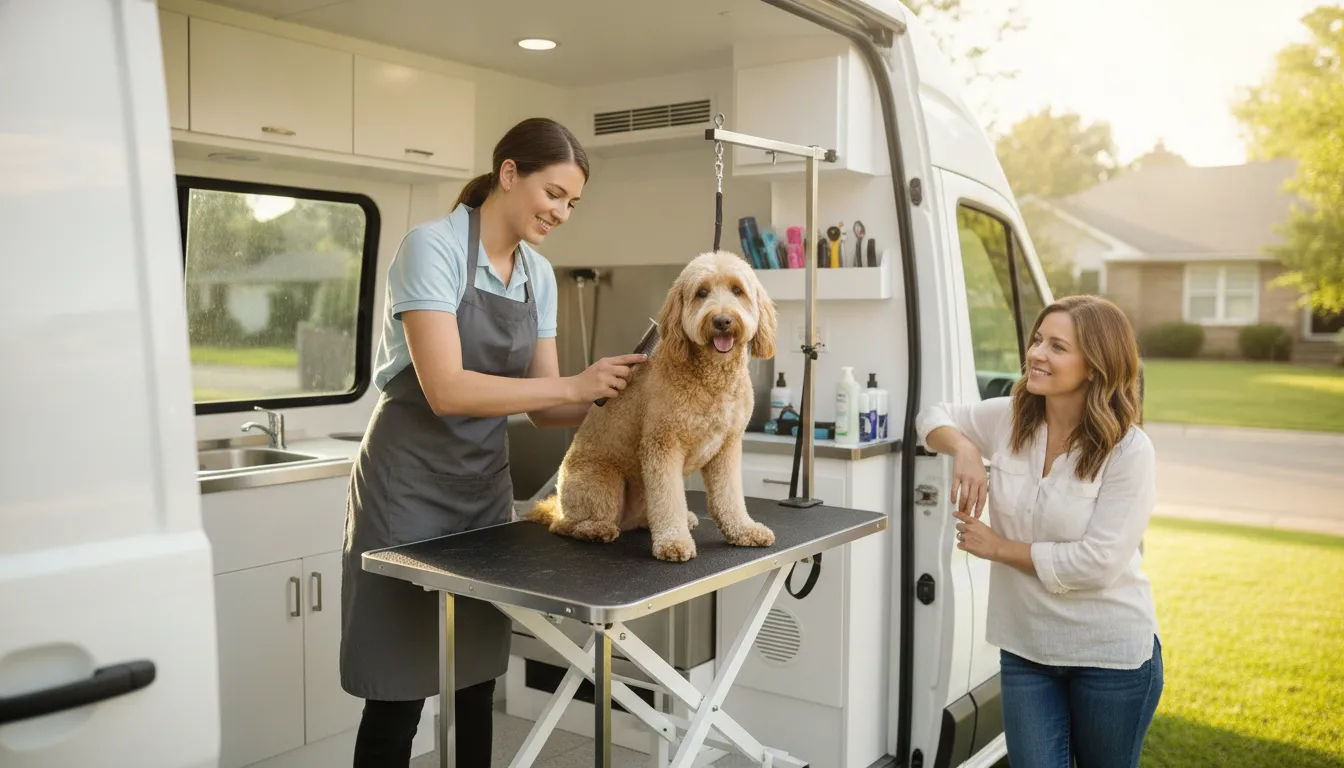
- Convenience: The service comes to the customer, reducing travel and facility-waiting friction.
- Ongoing care: Grooming can create repeat scheduling when customers trust the team and the service meets expectations.
- Home-based operations: A franchise may not require the owner to maintain a traditional retail salon.
- Service differentiation: Quiet equipment, one-on-one attention, and consistent customer communication can matter in a premium local market.
For an investor, the next step is not to assume demand. Ask whether the available territory contains enough potential customers, whether routes can be built efficiently, and whether the local labor market can support the staffing plan. A promising category still requires careful execution.
Useful diligence questions include: What customer acquisition assumptions are used in the launch plan? How long does it take to fill a new route? What rebooking behavior is expected? Which costs rise as the operation adds a van? What support is available when a groomer leaves? Clear answers make the opportunity easier to compare with other service-based franchises.
What Does a Mobile Dog Grooming Franchise Cost?
Cost planning should begin with the total initial investment, then move into the assumptions behind the range. Kontota states a total initial investment range of $92,800 to $145,100 for its mobile dog grooming franchise. That range is a planning input. It is not a promise of revenue, profit, or return, and the amount a buyer needs can vary with configuration, launch circumstances, financing, and available operating resources.
Kontota states an estimated initial investment range of $92,800 to $145,100. A prospective owner should verify what the range includes, review the FDD, budget for working capital and personal reserves, and separate business costs from financing or living expenses.
A mobile model can have a different cost structure from a retail grooming business. Kontota describes a home-based model without a customer-facing storefront, which can reduce some facility overhead. The business still requires a complete launch budget. Vehicle and equipment costs, franchise fees, insurance, staffing, marketing, technology, professional advice, and early working capital all deserve individual review.
| Category | Questions to ask | Why it matters |
|---|---|---|
| Total initial investment | What is included in the $92,800 to $145,100 range, and which assumptions create the low and high ends? | It establishes the business capital requirement for comparing opportunities. |
| Vehicle and equipment | What mobile unit, equipment, setup, delivery, maintenance, and replacement terms apply? | The van is central to service delivery, safety, reliability, and capacity. |
| Franchise and operating fees | Which initial and ongoing fees apply, when are they due, and what services or rights do they support? | Recurring obligations affect the budget even when sales fluctuate. |
| Working capital | How much reserve is recommended for payroll, insurance, marketing, fuel, maintenance, and early operating needs? | New routes may need time to build stable appointment volume. |
| Staffing and training | What hiring, onboarding, training, recruiting, and management costs should be modeled? | Staffing capacity is a core operating and safety consideration. |
| Professional and personal reserves | Which legal, accounting, financing, and personal living costs sit outside the stated business investment? | A complete plan prevents the business budget from being mistaken for the buyer’s total cash need. |
The published range should not be confused with every financial planning need. A buyer may need personal living reserves, financing costs, professional fees, contingency funds, and taxes depending on personal circumstances. Model those items separately. Also distinguish between a cost required to open and an expense that may recur after launch.
Before making a decision, request and review the Franchise Disclosure Document. Compare its disclosures with the investment assumptions. Ask which costs may change and which purchases are required. Qualified legal and financial advisers can help explain obligations, but the buyer remains responsible for understanding the business decision.
Do You Need Grooming Experience to Own One?
No. Kontota states that professional grooming experience is not required because the franchise owner focuses on management and hiring trained groomers to deliver the service. That distinction can widen the opportunity for entrepreneurs who bring leadership, sales, operations, finance, or people-management experience rather than grooming credentials.
You do not need to be a professional groomer to own a Kontota franchise. The owner leads the business and hires trained groomers, while remaining accountable for staffing, safety, customer experience, financial performance, and operating standards.
The owner-manager role is still substantial. It can include recruiting and retaining qualified groomers, managing schedules and customer relationships, monitoring performance, maintaining local marketing, reviewing finances, and making decisions about capacity and route density. The owner may not perform the technical service, but the owner is responsible for building the conditions in which the team can perform safely and consistently.
What trained groomers and systems contribute
Hiring trained professionals is a core part of the model, not a substitute for staffing leadership. A prospective owner should understand the qualifications required in the territory, the available recruiting channels, the training process, and the expected owner role in quality control. Grooming is hands-on work involving animals, equipment, customer expectations, and real safety considerations.
Kontota positions safety as a non-negotiable value and provides franchise training and operational support for owners. Its franchise support and training information should be reviewed alongside specific questions about groomer onboarding, quality controls, vehicle readiness, scheduling, and support when staffing challenges arise.
Questions to answer before investing
- How will you source, interview, and retain trained groomers in the territory?
- What compensation and scheduling approach fits the local labor market?
- Which safety procedures must every team member follow?
- How much time will you personally devote during launch and early operations?
- What metrics will tell you that service quality and customer retention are improving?
The model may suit an owner who prefers to lead people and processes rather than provide the technical service personally. It still requires active oversight, especially while the team and customer base are being established. Review the FDD and assess your staffing plan before deciding whether ownership is the right fit.
How Does the Launch and Daily Operation Work?
A mobile dog grooming franchise is built around a coordinated launch rather than the opening of a retail salon. Kontota’s home-based model allows the owner to manage the business without maintaining a traditional storefront, while trained groomers deliver services from branded vans at customers’ driveways. The early operating plan therefore needs to connect territory planning, recruiting, training, scheduling, safety, and customer acquisition.
A typical launch sequence includes discovery, territory and investment review, training, business setup, groomer recruiting, van preparation, local marketing, and route building. Kontota describes an approximate 90-day path from inquiry to launch, but the actual timing depends on decisions, staffing, territory conditions, and preparation.
- Begin with discovery and planning. The prospective owner evaluates the model, territory availability, investment requirements, and personal role. Protected-territory terms should be reviewed in the FDD and franchise agreement rather than assumed.
- Prepare the business foundation. Establish the home-based operating setup, complete required training, build the hiring plan, and prepare scheduling, customer communication, and oversight systems.
- Recruit and prepare the team. Owners do not need professional grooming experience, but they do need a dependable team. Reinforce safety expectations, service standards, and communication before the first customer route.
- Prepare the van and operating area. Confirm equipment, supplies, vehicle readiness, insurance, maintenance processes, and the procedures that protect pets and staff.
- Build efficient routes. Schedule appointments with geography and realistic service times in mind. Grouping nearby visits can improve route density, but efficiency should never come at the expense of safe handling or rushed appointments.
- Launch local customer acquisition. Build awareness in the territory, respond to inquiries, establish appointment routines, and track which marketing activities produce qualified customers.
- Review performance and improve. Monitor appointment volume, rebooking, route efficiency, staffing, customer feedback, equipment needs, and financial performance. Use the data to make measured changes.
Kontota describes battery-powered vans as part of its technology-driven approach. The company says this configuration avoids the noise and maintenance issues associated with traditional generators. A prospective owner should still ask about the exact vehicle specification, service procedures, maintenance responsibility, replacement planning, and any equipment terms in the current disclosure materials.
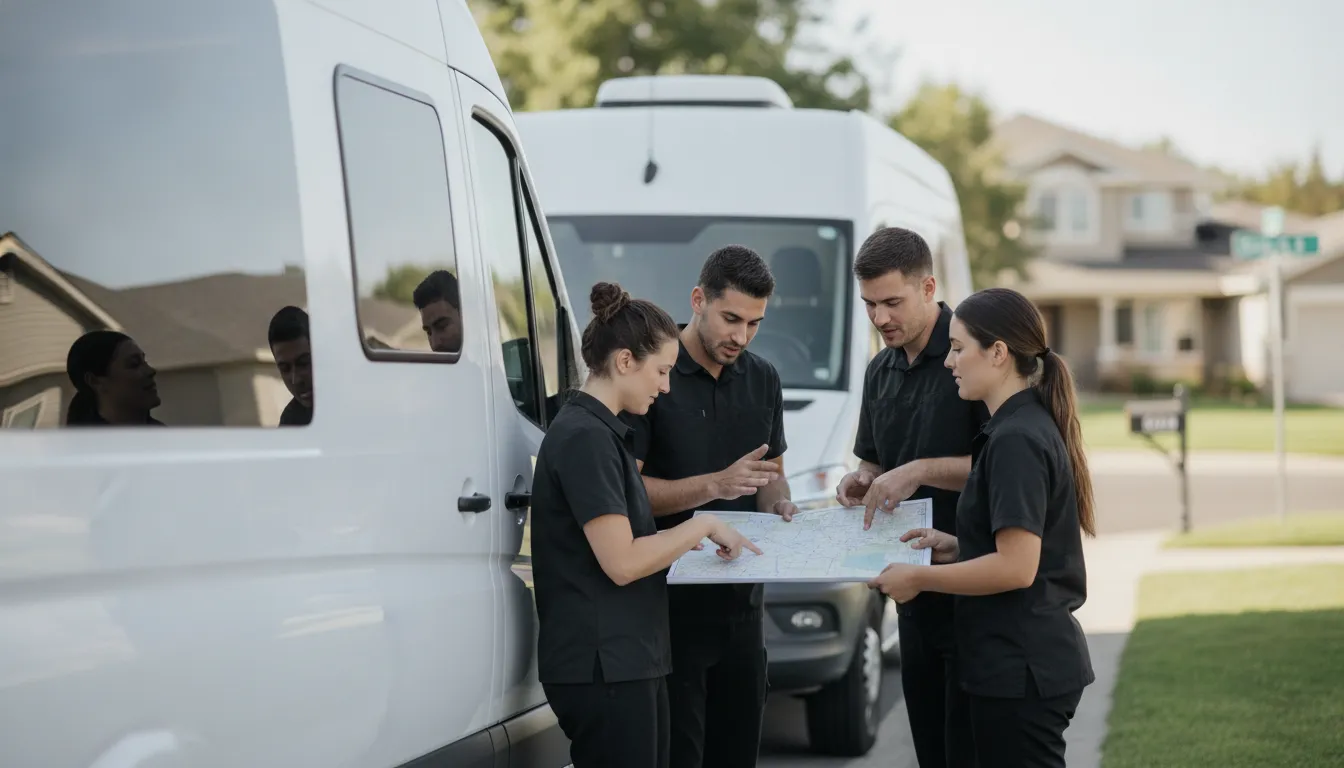
Early priorities are practical: hire carefully, protect the safety-first culture, keep schedules realistic, and learn where route density can improve. Technology can support visibility across appointments and operations, but it does not replace owner judgment. Investors should ask how training, territory planning, staffing support, van readiness, and operating metrics are handled in their market.
Is This a Good Semi-Absentee Franchise Opportunity?
A semi-absentee ownership path can appeal to an investor who wants to build a business without performing every service personally. It is not passive investing. The owner must establish reliable systems, hire well, monitor performance, and make timely decisions. In a mobile dog grooming franchise, customer experience, pet safety, scheduling, and team execution are closely connected.
A mobile dog grooming franchise may support a management-led or semi-absentee path after the owner builds reliable staffing and operating systems. It should not be treated as passive income. The owner remains accountable for people, safety, customer experience, finances, and decisions that require timely attention.
Two ownership paths to consider
An owner-operator may manage the day-to-day business directly, especially during launch. This path can provide firsthand knowledge of customer expectations, route planning, staffing needs, and the standards required for safe service. It can also help an owner understand the business before delegating more responsibilities.
A management-led owner hires trained groomers and focuses on the business side. Kontota states that professional grooming experience is not required because owners concentrate on management and hiring trained professionals. This path can widen the opportunity for career-transition professionals and existing business owners who are comfortable leading people and systems.
What semi-absentee ownership requires
- Recruiting, onboarding, and retaining dependable groomers.
- Tracking schedules, route efficiency, customer feedback, and safety standards.
- Reviewing financial performance and working-capital needs regularly.
- Setting clear accountability for vehicle care, equipment, service quality, and communication.
- Remaining available for escalations and decisions that cannot wait for a weekly review.
Recurring customer relationships can support planning, but they do not guarantee revenue, profitability, or owner freedom. Results depend on territory conditions, staffing, execution, demand, and management capability. Before choosing this path, model the owner’s time during launch. Identify the point at which an Operations Manager could be useful, and budget for the leadership capacity the business will need.
Could it become a multi-unit platform?
Some investors may eventually explore additional vans or territories after learning how to operate the first unit. An Operations Manager pathway may be a possible growth direction for a qualified leader who can coordinate daily execution. That is a potential progression, not an automatic outcome. Before pursuing additional units, evaluate manager capacity, hiring pipelines, territory economics, cash reserves, and the support available from the franchisor.
How Do Mobile Dog Grooming Franchises Generate Recurring Revenue?
Recurring revenue is one of the central reasons investors investigate grooming and other repeat-service concepts. The customer need does not end after one appointment. When a dog owner is satisfied with the service, the owner may schedule future visits. That creates a path to repeat business and a reason to study retention, capacity, route density, and customer communication closely.
A mobile dog grooming franchise can generate repeat revenue through recurring grooming appointments and customer relationships. Repeat bookings are not guaranteed. They depend on service quality, customer retention, pricing, groomer capacity, route efficiency, and local demand.
The operating loop behind repeat bookings
- Acquire a qualified customer. Marketing and referrals introduce the service to households in the territory.
- Deliver a safe, consistent appointment. The groomer and owner protect service quality, communication, and the pet’s experience.
- Make the next appointment easy. Clear follow-up and convenient scheduling can support the customer’s decision to return.
- Use performance data. The owner monitors rebooking, cancellations, route density, complaints, and capacity to improve the operation.
This loop is operational, not automatic. A high rebooking goal does not replace the work required to recruit excellent groomers, answer customers, maintain vehicles, schedule realistic routes, and handle service recovery. A buyer should ask how the franchisor defines rebooking, which data is available, and how owners are trained to improve retention.
Recurring revenue also changes the way an investor should model growth. Instead of focusing only on new-customer volume, examine the relationship between first appointments, rebooking, appointment frequency, average ticket, groomer capacity, route density, cancellations, and operating expenses. Conservative scenarios are more useful than a single optimistic projection.
How Should Investors Evaluate a Mobile Dog Grooming Franchise?
A polished presentation is not enough to make a franchise a sound investment. Before committing capital, evaluate the system as you would any operating business. Understand the obligations, test the assumptions, and decide whether the day-to-day model fits your strengths and resources. The U.S. Census Bureau has noted that franchising extends across many industries. So the right choice depends on the specific support structure, demand profile, and scalability of the system you are considering.
Evaluate a franchise by reviewing the FDD, modeling conservative economics, validating support and training, understanding territory and staffing requirements, speaking with current franchisees, and assessing whether the owner’s role fits your skills, time, and capital.
Start with the disclosure document and economics
Read the FDD carefully and review it with qualified legal and financial advisers. Pay particular attention to fees, renewal terms, territory rights, purchasing requirements, owner obligations, litigation history, and any financial performance representation. Build a budget that includes working capital, insurance, vehicle and equipment needs, recruiting, payroll, marketing, technology, and a personal cash cushion.
Test the operating system, not just the concept
Ask how territories are defined and protected, how training is delivered, and what support continues after launch. A mobile model also requires clear answers about route planning, scheduling, vehicle maintenance, safety procedures, quality control, and technology. Since owners manage the business and hire trained groomers rather than perform every service, staffing systems and retention support deserve close scrutiny. Review Kontota’s support and training information as part of that diligence.
Speak with franchisees and assess personal fit
Request validation calls with current franchisees, including owners at different stages. Ask what they expected, what surprised them, how responsive support has been, and which operating responsibilities consume the most time. Ask about hiring, customer acquisition, route density, vehicle maintenance, and the transition from launch to steady operations.
- Review the FDD and have advisers explain the financial and legal commitments.
- Confirm territory terms, training depth, technology, safety standards, and staffing support.
- Validate assumptions through several franchisee conversations.
- Model conservative economics, including working capital and owner compensation needs.
- Choose the opportunity only if the responsibilities and growth path match your goals.
Careful diligence does not eliminate business risk. It replaces enthusiasm with an informed decision and gives the buyer a clearer list of questions for the franchisor.
Book a discovery call with Kontota
Frequently Asked Questions
How much does a mobile dog grooming franchise cost?
Kontota states an estimated total initial investment range of $92,800 to $145,100. Review the FDD for applicable fees, equipment, working capital, and other details. The published range is a planning input, not a promise of profitability.
How can a mobile dog grooming franchise generate revenue?
Revenue depends on territory demand, pricing, groomer capacity, scheduling, retention, operating expenses, and execution. Recurring customer relationships can support repeat bookings, but no franchise can guarantee revenue or profit.
Do I need professional grooming experience to own a franchise?
No. Kontota states that professional grooming experience is not required because owners focus on management and hiring trained groomers. The owner remains accountable for staffing, safety, service quality, and business performance.
Can a mobile dog grooming franchise be semi-absentee?
It may be possible to build toward a management-led or semi-absentee structure after reliable systems and staffing are in place. It is not passive income. The owner still needs to oversee people, finances, customer experience, and operating decisions.
How do I get started with a mobile dog grooming franchise?
Start by reviewing the model, confirming territory and investment fit, assessing staffing needs, reviewing the FDD, and speaking with qualified advisers and current franchisees. Kontota describes an approximate 90-day path from inquiry to launch, subject to preparation and decisions.
Book a discovery call with Kontota
Ready to Explore a Mobile Dog Grooming Franchise?
A discovery call can help you discuss your goals, ask practical questions, and determine whether Kontota’s franchise model fits the type of ownership you are evaluating. You can request information, compare the operating model with other service-based franchises, and identify the diligence questions that matter most to you.

