
Buying a franchise is not a single decision made after a sales call. If you are researching how to buy a dog grooming franchise, treat the process as a sequence of questions: Does the business model fit your goals? Can you support the investment? What does the current Franchise Disclosure Document (FDD) actually say? And can existing franchisees validate the opportunity?
Book a franchise discovery call to explore the opportunity
The practical answer to how to buy a dog grooming franchise is to move deliberately from model research to qualification. FDD and Item 19 review, franchisee conversations, professional advice, and only then a signing decision. Grooming experience is not necessarily required, because the owner may manage the operation and hire trained groomers, but the business still demands disciplined leadership.
For a mobile concept, that evaluation begins with understanding what you are buying beyond the vehicle or equipment. You are assessing the operating system, territory, staffing plan, technology, safety standards, and support behind the customer experience. Once those pieces are clear, you can judge whether the model deserves a closer look and build a useful diligence file.
How to Buy a Dog Grooming Franchise by Choosing the Right Model
The first step is not comparing logos, packages, or promotional language. It is understanding how the business actually creates value, serves customers, schedules work, manages staff, and controls quality. A mobile dog grooming franchise and a brick-and-mortar salon may serve the same broad need, but they place different demands on the owner, team, territory, and operating system.
Start with customer and market context, then work backward to the model. The American Pet Products Association reported $158 billion in U.S. pet-industry expenditures for 2025 and projected $165 billion for 2026. These figures establish a category, not a guarantee for an individual franchise. Your diligence still needs to examine local demand, competition, labor availability, and support. Review the APPA 2025 expenditure report for the publication date and methodology.
Labor supply is another practical question. The Bureau of Labor Statistics projects 11% growth in animal-care and service-worker employment from 2024 to 2034, with about 81,700 openings per year. That is an industry labor statistic, not a Kontota hiring forecast. Use the BLS occupational outlook as one input, then test recruiting conditions in your proposed territory. Ask how appointments are booked, routes planned, customer history tracked, and safety procedures managed. A technology claim matters only when it improves a measurable process.
Mobile and brick-and-mortar models solve different problems
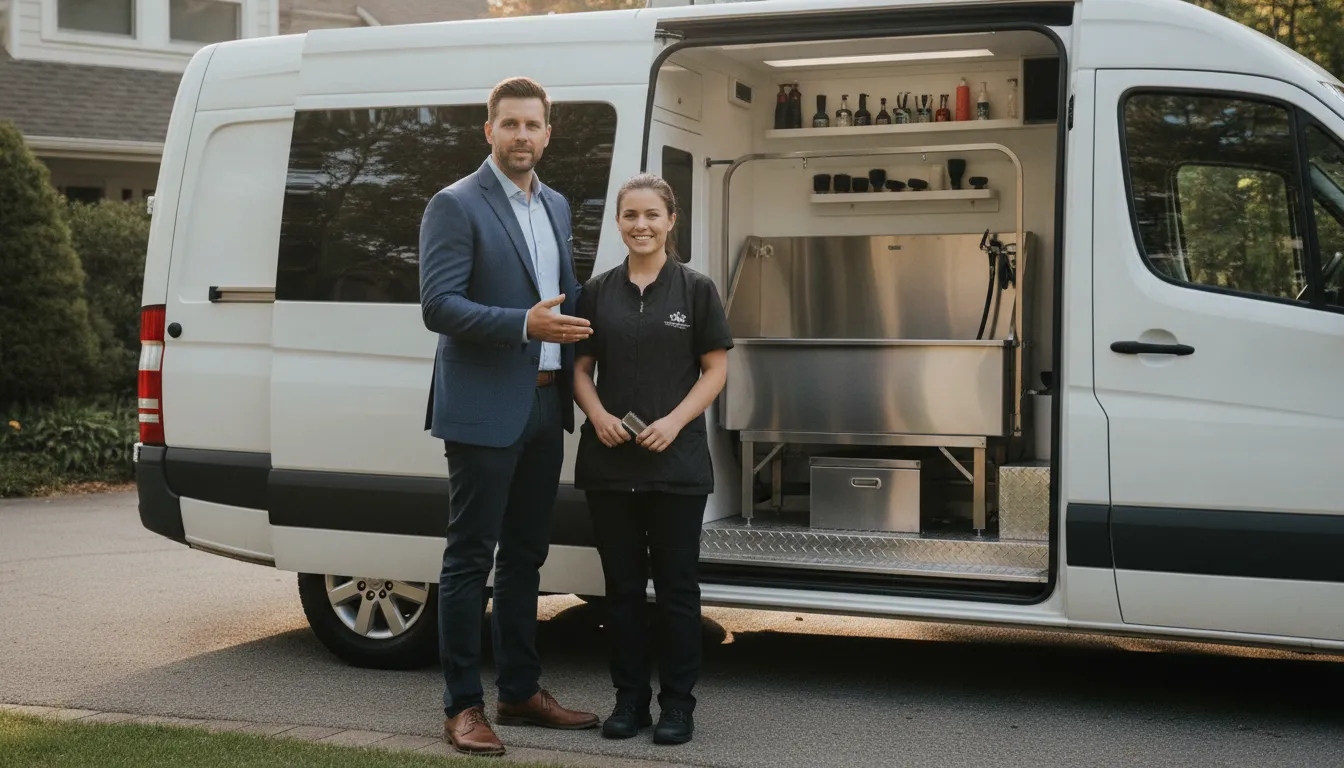
A brick-and-mortar salon concentrates services in a fixed location. That can create a recognizable destination, but it also makes the site, buildout, utilities, equipment, local visibility, and staffing model central to the decision. A mobile model takes the service to the customer’s location. Its economics and operating constraints are tied more closely to vehicle capacity, route density, travel time, scheduling discipline, and territory design.
Neither format is automatically superior. Compare your market, owner role, fixed and variable expenses, capacity plan, and customer-experience controls. Review the Kontota business model with those questions in mind.
The owner manages the business, not necessarily the grooming appointments
Many buyers assume they must become the primary groomer. That is not the only ownership path. A franchise owner can focus on hiring, coaching, scheduling, customer relationships, local marketing, and financial oversight while employing trained groomers. Prior grooming experience is not a prerequisite for Kontota’s model, but operational leadership is still essential. You need the judgment to recruit well, enforce safety protocols, monitor service quality, and respond when the plan changes.
Check these systems first.
Is a Mobile Dog Grooming Franchise the Right Fit?
The right owner is not necessarily the person holding the clippers. See this mobile dog grooming franchise roadmap. In Kontota’s model, the franchisee is responsible for building and managing the business, while trained groomers deliver the grooming services. That distinction makes the opportunity relevant to entrepreneurs, career-transition professionals, existing business owners, and investors who are interested in operating a service company without becoming the service technician.
Start with the owner role, not the grooming role
Before you decide how to buy a dog grooming franchise, be honest about the work you want to own. A franchise owner may oversee hiring, scheduling, customer experience, local marketing, financial controls, vendor relationships, and day-to-day operating standards. You will need to make decisions, follow the operating system, review performance, and address issues when they arise. Those responsibilities require management discipline and consistency more than a personal grooming background.
No grooming experience is required for Kontota’s model because owners can hire trained groomers. That does not mean the owner can be disengaged. You still need to understand the customer promise, support a safe workplace, recruit effectively, and hold the team accountable to established procedures. A willingness to learn the business and manage people is more relevant than a desire to perform every technical task yourself.
Consider whether a semi-absentee path matches your goals
Some owners want to stay active in local operations. Review the franchise support overview when you assess the training and systems behind that role. Others may evaluate semi-absentee ownership after the business is stable. Kontota supports an Operations Manager pathway for owners who want to transition daily responsibility to a qualified leader. This is a structure to evaluate, not a promise of hands-off ownership.
If semi-absentee ownership is part of your plan, ask practical questions early. What responsibilities would remain with you? Which decisions would belong to the Operations Manager? How would you review staffing, customer feedback, safety performance, scheduling, and financial results? A clear answer helps you assess whether the model fits your time commitment, leadership style, and long-term objectives.
Look for alignment with safety, systems, and support
Safety should be treated as an operating requirement, not a marketing slogan. The owner-fit question includes whether you are prepared to make safety-first decisions when they affect scheduling, staffing, equipment, or service capacity. You should also be comfortable using technology and standardized systems. Kontota’s technology-driven approach is designed to help owners organize operations and make informed management decisions, while documented processes create consistency as the team grows.
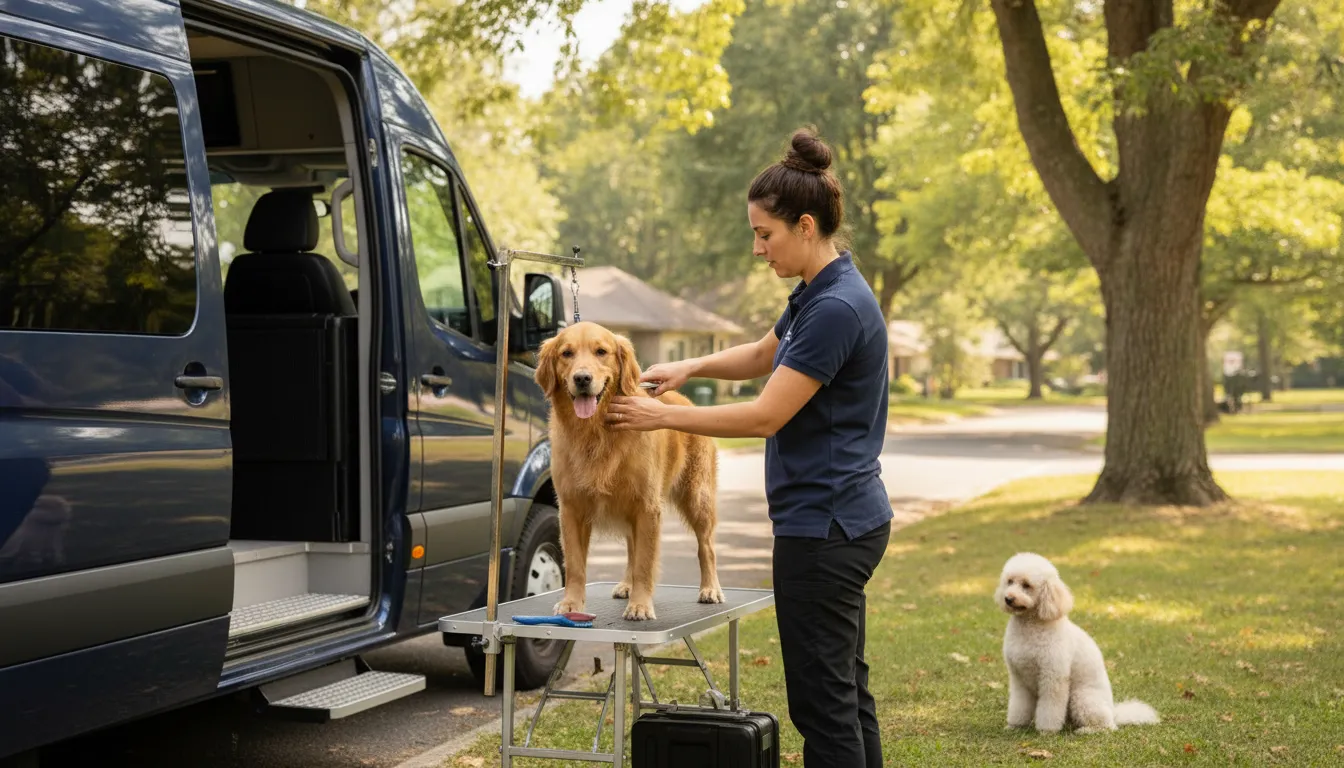
Support matters because first-time owners should not be expected to build every process alone. Review Kontota’s training and support carefully, including what is provided during launch and what continues afterward. Ask how training is delivered, how operational questions are handled, and how the franchisor helps owners navigate recruiting, customer experience, and local growth.
Ultimately, fit comes down to your willingness to lead people, protect safety standards, use the system, and stay engaged with performance. Animal-care experience may help, but it is not the admission test. A stronger evaluation asks whether you can manage responsibly, learn the model, and build a capable team.
What Should You Budget When You Buy a Dog Grooming Franchise?
Cost planning should begin with the full investment picture, not just the franchise fee. Review the Kontota business model before modeling costs. You need to understand the upfront amount, ongoing fees, financial qualifications, and territory decisions that can change your launch plan. The figures below are approved Kontota figures for planning. Always use the current Franchise Disclosure Document (FDD) for complete terms, assumptions, and disclosures.
| Cost or qualification | Approved figure | What to verify in the current FDD |
|---|---|---|
| Initial franchise fee | $42,000 | What the fee covers, when it is due, and whether any portion is refundable. |
| Estimated total initial investment | $95,000-$153,500 | Which startup costs are included, the assumptions behind the range, and expected working capital needs. |
| Royalty | 7% of gross sales | How gross sales are defined, when payments are calculated, and how reporting works. |
| Technology fee | $100 per month | What systems the fee supports and whether technology-related charges can change. |
| Recommended net worth | $250,000 | How the franchisor evaluates financial capacity and what liquid capital may be expected. |
| Qualified veteran discount | 10% off the initial franchise fee | Eligibility requirements, documentation, and any timing conditions. |
| Additional territories | $2,000 reduction for each additional territory | Territory definitions, availability, geographic boundaries, and the conditions for the reduction. |
Separate one-time costs from ongoing obligations
The initial investment is a range because startup requirements vary by market and operating plan. As you build a budget, separate pre-opening costs from recurring obligations. Ask which expenses cover equipment, vehicle preparation, training, marketing, insurance, licenses, professional services, and working capital. Confirm which items are estimates rather than fixed charges. This helps you compare available capital with the cash needed to open and operate responsibly.
Ongoing fees deserve the same attention. A 7% royalty is calculated from gross sales, so your model should show how it interacts with payroll, fuel, insurance, maintenance, marketing, and other expenses. List the $100 monthly technology fee separately. Do not treat an estimated cost range or sales figure as a promise. Rely only on the current FDD and its Item 19 disclosure.
Let territory availability shape the plan
Territory selection is both a growth decision and a budgeting decision. First, confirm whether the area you want is available and how the franchisor defines and protects it. Then ask whether the territory can support your intended operating model, staffing plan, and service capacity. If you are considering multiple territories, account for the $2,000 reduction for each additional territory, while verifying the eligibility rules and total fees in the current FDD.
Compare the approved figures with personal capital, financing terms, and a conservative operating budget. Review the FDD with qualified advisors, ask about every fee, and document answers before deciding whether the opportunity fits your resources.
How Do You Qualify and Prepare for Due Diligence?
Qualification and due diligence are related. Kontota also explains how to evaluate a business investment. The franchisor considers whether your goals, resources, experience, and operating approach fit the system. You investigate whether the opportunity fits your objectives, risk tolerance, finances, and market. Approval is not a substitute for independent investigation.
If you are researching how to buy a dog grooming franchise, prepare a working diligence file before a final decision. Keep the FDD, territory research, financial projections, questions, and professional advice in one place.
- Define your goals and owner role. Write down why you are considering ownership, how involved you expect to be, and what success would mean beyond revenue. Decide whether you want to operate day to day, build a management team over time, or pursue a multi-unit path. Be candid about your availability, leadership experience, and comfort managing employees. Grooming experience is not necessarily required for this model, but the owner still needs to lead the business, follow system standards, and make sound operating decisions.
- Document capital, liquidity, and net worth. Assemble a personal balance sheet showing assets, liabilities, liquid funds, and available reserves. Separate money available for the initial investment from funds needed for household obligations and an appropriate operating cushion. Ask how fees, equipment, vehicles, payroll, insurance, technology, marketing, and working capital are treated in the current FDD. Do not rely on a generic online estimate. Your financing plan should account for employee compensation and tip structures, which prospective owners should analyze as part of financial planning. Local costs and lender requirements can materially change the amount you need.
- Study the market and proposed territory. Evaluate population, household characteristics, competitor coverage, travel patterns, demand indicators, recruiting conditions, and the practical service radius. For a mobile concept, territory boundaries and route density deserve particular attention because they affect scheduling and productivity. Confirm what the franchisor has represented about territory rights and availability, then test those representations against local conditions. Licensing, permits, vehicle rules, zoning, and health department requirements vary by state and locality. So verify the rules with the relevant authorities rather than assuming another market’s process applies.
- Build a business plan with testable assumptions. Translate your research into an operating plan covering launch timing, staffing, customer acquisition, scheduling, pricing, expenses, and management responsibilities. Show which assumptions come from the franchisor, which come from local research, and which are your own estimates. Stress-test slower hiring, lower utilization, higher fuel or insurance costs, and a delayed ramp. Treat any financial performance representation only as presented in the current FDD, including its stated assumptions and limitations. Do not turn an example into a promise or present a projection as guaranteed results.
- Engage qualified professional advisors. Have a franchise attorney review the FDD and agreement. Ask an accountant or financial advisor to examine the investment, tax considerations, cash flow, and financing plan. A business purchase requires careful analysis of financial statements and relationships. See this SCORE due diligence checklist. Compare professional advice with the current FDD before signing.
Keep the current FDD as the controlling source for terms, fees, obligations, and Item 19 information. Older summaries and informal conversations can help you develop questions, but cannot replace the document you are offered. Review Kontota’s franchise buying FAQs for more questions.
How Should You Review the FDD and Item 19?
The Franchise Disclosure Document, or FDD, is the controlling disclosure document for evaluating a franchise opportunity. Treat it as a working document for questions, not a brochure or a substitute for professional advice. It presents required disclosures across 23 items, including the business, investment, fees, obligations, territory, training, restrictions, renewal, and termination. Your goal is to understand what you would buy, owe, and be required to do before signing.
Read the document from beginning to end, then return to sections relevant to your proposed operation. Compare each estimate with your plan. Ask which costs are one-time, recurring, discretionary, or dependent on local conditions. Review the franchise fee, royalties, technology fees, marketing contributions, vehicle expenses, insurance, payroll, supplies, and working capital. A modest fee can affect cash flow when combined with staffing, maintenance, fuel, scheduling, and other costs.
Review the operating obligations, not just the investment summary
The FDD should be read alongside the franchise agreement and related exhibits. Examine the territory description carefully. Determine whether it is exclusive, how customer addresses or service boundaries are treated, and what rights the franchisor retains outside the territory. Review required technology, approved suppliers, branding standards, operating procedures, training requirements, reporting duties, and restrictions on transfers or competing activities. For a mobile dog grooming business, also ask how vehicle specifications, service quality, safety procedures, staffing, and scheduling expectations affect daily management.
Renewal and termination provisions deserve the same attention as launch requirements. Identify renewal conditions, notice deadlines, cure periods, default triggers, post-termination restrictions, and obligations involving customers, equipment, branding, and confidential information. These clauses describe important long-term risks. SCORE’s due diligence guidance emphasizes careful analysis of financial statements and business relationships. You can also evaluate a mobile dog grooming franchise through that lens.
Handle Item 19 with discipline
Item 19 is the section to examine when the franchisor provides a financial performance representation. First confirm whether Item 19 is included and what population, period, geography, assumptions, and exclusions its data covers. If it is absent, that is meaningful: do not create an earnings estimate from anecdotes, industry growth statistics, social media posts, or conversations with a salesperson. If it is present, use only the information actually disclosed. A disclosed average is not a forecast for your location, and revenue is not profit. Costs, staffing, taxes, financing, downtime, and local demand can change the result materially.
Ask the franchisor to explain anything unclear, and record the answers. Then have a franchise attorney review the FDD and agreement, while a qualified financial advisor or accountant tests the investment assumptions against your personal resources and operating plan. FDDs are essential tools for analyzing a franchise opportunity’s financial performance, but they work best as part of a wider diligence process. Take the time to reconcile the document, your territory research, and conversations with franchisees. No disclosure data should be presented or interpreted as an earnings promise or guarantee.
What Should You Ask Existing Franchisees Before Signing?
Conversations with current franchisees can turn a polished presentation into a clearer view of daily ownership. They should not replace the current FDD, professional advice, or your financial analysis. They add operating context that formal documents cannot fully provide.
Ask each owner the same core questions, then compare patterns rather than treating one conversation as a verdict. Franchisee results and experiences vary by territory, staffing decisions, local demand, management ability, and timing. Profitability should be evaluated through available FDD information and direct conversations about operations, not through promises or isolated success stories. Speaking with current owners is a recognized part of validating a franchise opportunity, particularly when you want to understand how the model works beyond the sales process.
Questions about revenue and operating reality
Begin with open questions that invite detail without asking an owner to disclose confidential information. You might ask:
- What did your first year look like compared with your original expectations?
- Which expenses were higher or lower than you anticipated?
- How long did it take to build a reliable appointment base?
- Which metrics do you watch each week to understand the health of the business?
- What would you budget differently if you were starting today?
Do not press an owner for private records. You are looking for the shape of the experience: how revenue is generated, which costs move with volume, and where assumptions required adjustment. Ask whether the answers reflect a typical period, an unusual launch, or a mature operation. Compare any shared financial information with the applicable FDD disclosures rather than generalizing it to your future territory.
Questions about people, vans, and the owner role
Because the owner manages the business and can hire trained groomers, staffing deserves direct attention. Ask how the franchisee recruits, evaluates, schedules, and retains groomers. What skills are hardest to find locally? How long did hiring take? What happens when a groomer calls out, leaves, or needs additional coaching? Ask whether the owner personally grooms, manages a team, or uses an Operations Manager pathway after the business stabilizes. The goal is to understand the workload, not to assume a semi-absentee structure is automatic.
Explore the operational details of a mobile model. Ask how appointments are scheduled and rescheduled, how routes are built, and how much time is lost to travel, cancellations, maintenance, cleaning, or supply runs. Ask what van issues have created the most disruption, how preventive maintenance is handled, and which responsibilities stay with the owner. Safety should be equally concrete: ask how the team handles animal behavior, equipment checks, incident reporting, weather, and customer communication. An owner who can explain these routines clearly is more useful than one who offers only broad praise.
Questions about technology, support, and launch
Ask franchisees which technology tools they use every day and whether those tools reduce administrative work or create friction. How dependable are scheduling, customer communication, payment, route planning, and reporting systems? What happens when a tool fails? Then ask how quickly the franchisor responds when an owner needs help. Request examples involving staffing, safety, marketing, vehicle operations, or a difficult customer situation. Specific examples reveal more about support responsiveness than a general statement that support is available.
Finally, reconstruct the launch experience. How closely did training prepare the owner for opening? Which steps took the longest? Did territory planning, financing, hiring, vehicle preparation, or local requirements affect the timeline? Kontota describes a launch path of roughly 90 days, but your schedule will depend on preparation and local conditions. Review starting your mobile dog grooming franchise for an early-process overview.
After each call, record the question, the answer, the owner’s tenure and operating structure, and any follow-up needed. Compare answers across newer and more established owners, different territories, and different staffing models. Consistent answers can identify repeatable systems. Meaningful differences are not automatically problems, but they deserve explanation before you decide whether the opportunity fits your goals and how to buy a dog grooming franchise responsibly.
What Happens After You Decide to Move Forward?
Reaching out to a franchisor is not the same as committing to buy. It begins a detailed evaluation of your goals, resources, preferred market, and intended owner role. The franchisor is evaluating fit as well, including whether your expectations align with the brand’s standards.
Next, the development team can examine territory availability and market conditions. Ask how the proposed territory is defined, whether nearby territories affect customer acquisition, and how travel time could influence scheduling and operating costs. You should leave this stage with a clearer view of the market and launch assumptions.
Review the current FDD before making a commitment
Before signing or paying fees, request and study the current Franchise Disclosure Document. It is the central disclosure resource for understanding the franchise relationship, including the franchisor’s background, required fees, obligations, restrictions, territory provisions, training, and other material terms. If the FDD includes an Item 19 financial performance representation, review it carefully and use only the information and limitations presented there. Do not treat a sales conversation, a general industry statistic, or another franchisee’s results as a promise of your own performance.
The review process also includes an applicable waiting and review period. The exact requirements depend on the governing rules and the documents involved, so do not rely on an assumed number of days. Use the time to read the FDD, compare it with the proposed agreement. Organize questions, and discuss the opportunity with an attorney experienced in franchise matters and an accountant. A careful diligence process should examine financial information, business relationships, and the broader community and market context, as outlined in SCORE’s business due diligence checklist.
Meet the team, plan financing, and decide deliberately
Once the disclosure review is underway, you may meet the headquarters team and learn more about training, technology, safety systems, and ongoing support. Training is an opportunity to understand how the owner manages the operation, hires and supports trained groomers, and uses the system to deliver consistent service. It is also a chance to identify the work you will need to do before launch.
Financing conversations can happen alongside this process. Build a plan based on your resources, financing terms, working-capital needs, and professional advice. Keep estimates separate from guaranteed outcomes. The final decision should be mutual and informed. If the model, territory, economics, or agreement does not withstand your review, pausing or walking away is valid. If it does fit, sign only after your advisors answer your questions and you understand the obligations. That is the responsible way to learn how to buy a dog grooming franchise without turning interest into pressure.
Request the conversation and review the next steps with Kontota
Frequently Asked Questions
How much does it cost to buy a dog grooming franchise?
Kontota’s approved estimates place the total initial investment at $95,000 to $153,500. The current FDD provides the complete assumptions and cost details. Review working capital, territory expenses, staffing, insurance, and local requirements rather than focusing only on the initial franchise fee.
Is dog grooming experience required to buy a franchise?
No. Kontota’s model is designed for owners who manage the business and can hire trained groomers. You should still be prepared to lead people, follow safety systems, manage scheduling and finances, and make decisions that support consistent customer service.
What are the advantages of choosing a mobile grooming model?
A mobile model can support a home-based, lower-overhead operation and may offer greater territory flexibility than a brick-and-mortar salon. Its fit depends on local demand, route density, vehicle requirements, staffing, and your ability to manage operations in the field.
What should I review in the FDD before signing?
Read all 23 sections with a franchise attorney and accountant. Pay particular attention to fees, territory rights, obligations, renewal and termination terms, training, restrictions, and Item 19, if provided. Use the current FDD as the controlling source, not a sales summary or older document.
How can I evaluate whether the opportunity is financially suitable?
Build a conservative plan using your available capital, financing terms, expected staffing costs, compensation and tip structures, local licensing requirements, and working-capital needs. Then compare your assumptions with the FDD and speak directly with current franchisees about their operating experience. No historical information guarantees future results.
Book a Franchise Discovery Call
A conversation with the Kontota team can help you review the current FDD, discuss Item 19, and consider whether the opportunity fits your goals. You can bring your questions, examine the business model, and decide on next steps without pressure.